
English
Reading for Pleasure:
At Abbey Primary School we foster a real love of reading right from the very beginning. High quality storytime is a feature across the school and our youngest children are encouraged to take high quality books home to share with a grown up. Starting right from the very beginning enables children to develop a real love of reading and by the time they leave our school the majority of children are confident and avid readers.
Phonics:

At our school we follow the RWI phonics scheme, which begins in the Summer Term of Nursery for the majority of children. Children begin with initial sounds and then usually complete RWI by the end of Year One.
Reading:
Whilst children are following the RWI scheme they will have the opportunity to bring RWI books and book bag books home to support their learning as well as a book to read for pleasure with a grown up. Once children have reached the yellow RWI stage they will join Accelerated Reader and have a book to read at home which matches their reading ability, alongside their RWI book whilst still following the scheme. They will complete a Accelerated Reader STAR assessment which will give them a ZPD (zone of proximal development). They will then be able to choose their own books within their range. Children are encouraged to read daily with a grown up and will complete a quiz once the book is completed. This is encouraged through rewards in school.
English:
Whilst in Reception and KS1 children will have separate Reading and English lessons. Reading lessons in Year Two, once they have completed RWI, consist of developing and building the higher order skills of reading such as inference, prediction and summarising. English lessons consist of developing the love and mechanics of writing through high-quality texts.
When children enter KS2, Reading and English lessons work alongside one another, often with the same text being studied. This enables children to really become emersed in a text and have a depth of understanding. In KS2 English lessons children study longer pieces of high quality texts ranging from established authors, classics and more modern authors. In this way they develop a breath and depth of learning and have the opportunity to use and apply the skills and techniques that these authors deploy.
Handwriting:
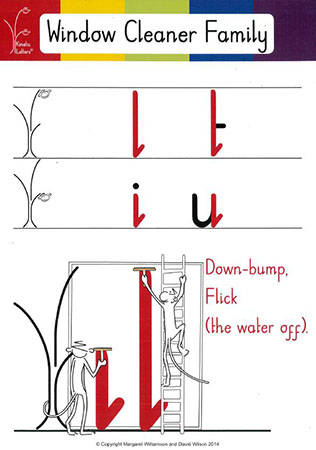
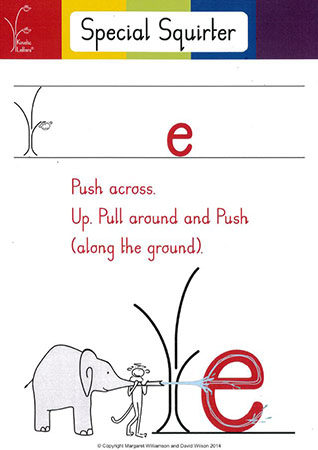
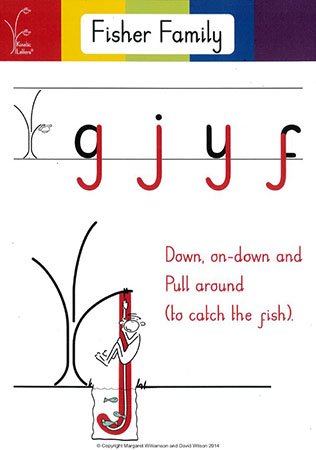
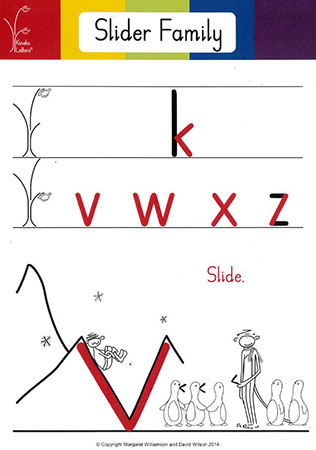
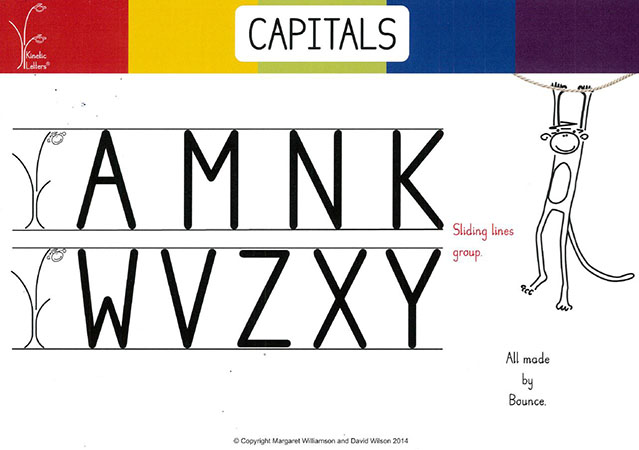
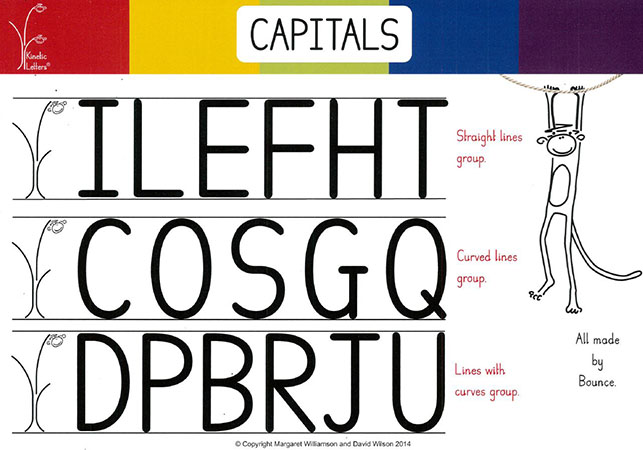
At our school we use Kinetic Letters handwriting and this begins right from Nursery up to Y4. The programme concentrates on four strands: making bodies stronger, learning the letters, holding the pencil and flow & fluency. This enables children, by the time they get to the end of Year Six to have ‘writing [which] is legible and fluent.’
Jumper Family

Abracadabra Family

Window Cleaner Family
Special Squirter
Fisher Family
Slider Family
More Capitals

Spelling:
Spelling at Abbey is taught in discrete spelling lessons once a week but is then consolidated and built upon daily. Spelling lessons follow the breadth and coverage of all the National Curriculum spelling requirements for each year group.
Intent:
- For all children to be able to access the English curriculum – for it to be matched to their ability/ set the right amount of challenge.
- For all children to become fluent readers who read for enjoyment.
- To provide a range of reading materials and areas of study which caters for children’s interest and ensures their engagement.
- For all children to have the opportunity to write for a purpose and see a value in what they write.
- For the English curriculum to meet the requirements for the National Curriculum and each year group.
- For children to reach the age related expectations at the end of each Key Stage.
- For children to be able to apply their skills in English across many subjects and situations.
Implementation:
- All teachers know the requirements for their year group and all children make progress with challenging/ supportive lessons provided.
- Teachers follow the scheme but have the flexibility to choose texts to match the abilities/ interests of their class.
- Children have the opportunity to develop/ consolidate skills and concepts taught cross-curricularly.
- Assessment/ moderation/ support is available to ensure high standards in English.
- English lead knows her subject and is able to support/ guide staff where needed.
- Teachers ensure that children are immersed in a vocabulary rich diet and this is used to develop children’s repertoire of language.
Impact:
- Standards are rising in English – Phonics, Reading and Writing.
- Children love to read and enjoy taking quizzes – certificates/ incentives across the school.
- The library is used a lot by children and there is a buzz about books.
- Summative assessments including Accelerated Reader data show progress.
- Quality of writing and standards in books are high.